Eco Cleaning Tools That Actually Work
10/13/2025
⏱ 6-minute read
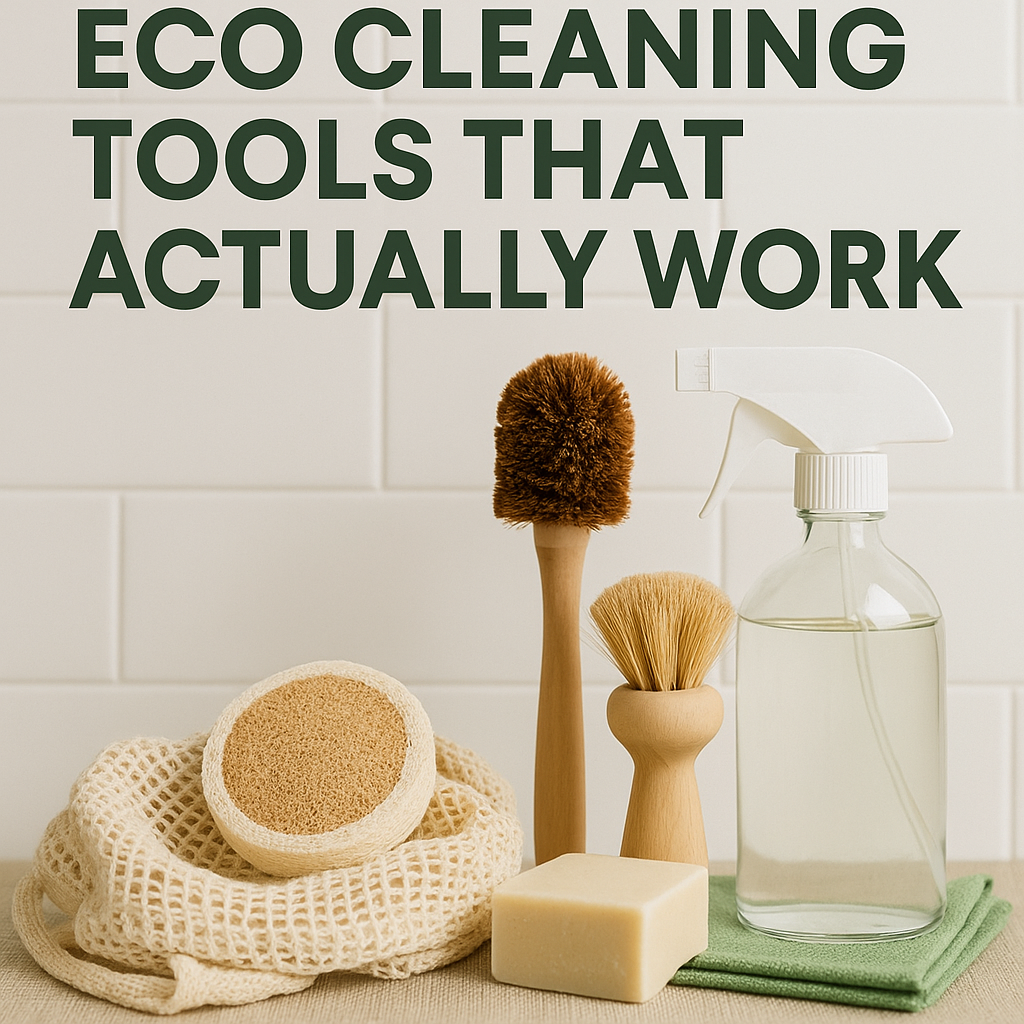
Our cleaning routines are often filled with hidden waste — disposable paper towels, plastic sponges, and synthetic cloths that wear out fast and pollute even faster. But cleaning your home shouldn’t mean dirtying the planet. This guide breaks down the eco cleaning tools that actually perform better than their plastic counterparts, helping you save money, reduce waste, and create a toxin-free home that sparkles.
🌿 Why Sustainable Cleaning Tools Matter
Every time you wash dishes or scrub a countertop with a plastic sponge, you’re releasing microplastics into your home’s air and water. These microscopic fragments shed with every use — ending up in your lungs, your drinking water, and even the ocean. Compostable and reusable cleaning tools help cut this pollution at the source while still getting the job done.
Swapping just a few household staples can dramatically reduce your home’s waste footprint. You don’t need to compromise on cleanliness or performance — eco tools are now just as effective, and often more stylish and ergonomic, than their plastic counterparts.
🪵 1. Bamboo Dish Brushes
If you still use plastic-handled brushes or synthetic scrubbers, it’s time for an upgrade. Bamboo dish brushes are fully compostable, naturally antibacterial, and easy to grip. The bristles (made from plant fibers like sisal or coconut husk) handle grime without scratching delicate cookware.
- Pros: Compostable, durable, toxin-free, looks great on your counter.
- Cons: Not dishwasher safe; let it air dry between uses.
- Best use: Everyday dishes, pots, and pans.
Replace the brush heads every few months and compost them when worn out. Unlike plastic brushes, bamboo ones naturally break down without releasing microplastics — closing the loop on your cleaning cycle.
What to Look For: When purchasing a bamboo dish brush, ensure the bristles are made from natural fibers. Avoid those with plastic connections between the brush and handle. Opt for models with a removable head, which simplifies the replacement and extends the handle’s life.
Quick-Start Checklist:
- Purchase a set with interchangeable heads for various cleaning tasks.
- Store in a dry place to extend the life of the bamboo.
- Test on sensitive surfaces, like non-stick pots, to ensure they won’t scratch.
🧽 2. Swedish Dishcloths
These reusable cloths — made from cellulose and cotton — are the modern replacement for paper towels and sponges. A single Swedish dishcloth can replace up to 17 rolls of paper towels. They’re ultra-absorbent, quick-drying, and fully compostable after hundreds of uses.
- Pros: Extremely absorbent, reusable, machine washable, compostable.
- Cons: Slightly stiff when dry (softens with water).
- Best use: Countertops, appliances, bathroom surfaces, and general spills.
Keep a small stack of them handy — one for the kitchen, one for the bathroom, one for dusting. You can toss them in the washer or even boil them to sanitize. Once they’ve worn thin, they’ll break down naturally in compost.
Buying Tips: Check for Swedish dishcloths that dry quickly and retain their absorbency after several washes. The best versions often have simple, elegant prints that don’t fade easily. Aim for dishcloths that balance softness when wet with durability.
Common Mistakes:
- Using them dry: Always wet them first to unlock their full absorbency.
- Overcrowding in the washer: Wash them on their own or with similar lightweight items to prevent tangling.
🧺 3. Glass Spray Bottles
Ditch disposable plastic spray bottles and switch to durable amber glass bottles that you can refill for life. Pair them with DIY cleaners made from vinegar, baking soda, and essential oils for a complete non-toxic cleaning kit. The amber tint protects ingredients from UV light, keeping your formulas fresh longer.
- Pros: Reusable, plastic-free, protects ingredients, easy to clean.
- Cons: Breakable if dropped.
- Best use: Multi-purpose cleaners, window sprays, and room mists.
Steps for Best Use: After each use, rinse the bottle with warm water to avoid residue build-up. Label your bottles with contents and dilution ratios using a removable sticker. If you’re worried about breakage, fit the bottles with silicone sleeves to cushion impacts.
Double-check:
- Spray nozzle quality: it should provide a consistent mist without drips.
- Tight seals: ensure caps are leak-proof to maintain your cleaning solution’s potency.
🧼 4. Castile Soap & Concentrates
No eco cleaning routine is complete without pure Castile soap. This all-purpose cleaner replaces multiple bottles under your sink — dish soap, hand soap, floor cleaner, even laundry detergent. Dilute it with water to make gallons of gentle, biodegradable cleaner that’s safe for every surface.
Combine Castile soap with reusable tools like Swedish cloths and bamboo brushes, and you’ll have a cleaning routine that’s zero-waste, cost-effective, and entirely plastic-free.
Usage Guide: Experiment with dilution ratios to address different cleaning needs. For instance, use a 1:16 ratio for floor cleaning and a 1:4 ratio for dishwashing.
Things to Avoid:
- Mixing with vinegar: this neutralizes soap and reduces efficacy.
- Using too much in laundry: concentrate might leave residues on clothes.
🌸 5. Reusable Cleaning Cloths & Mop Pads
Instead of single-use mop pads and disposable wipes, invest in microfiber-free reusable cloths. Look for cotton or hemp versions that don’t shed microfibers. These can be machine washed hundreds of times and are compostable at the end of their lifespan.
- Pros: Washable, long-lasting, no microplastic shedding.
- Cons: Need regular washing to stay fresh.
- Best use: Floors, walls, baseboards, and kitchen surfaces.
Guidelines for Purchase: Opt for cloths with tight weaves to capture dust without leaving streaks or residue. Those with higher cotton content tend to be more absorbent.
Maintenance Tips:
- Rinse thoroughly after each use to prevent odors.
- Dry completely before storage to deter mildew.
🗜️ FAQ & Troubleshooting
Can I use eco cleaning tools with regular cleaning products?
Yes, you can, but to truly maximize the eco benefits, pairing them with natural or DIY cleaners helps maintain the integrity of both the tools and surfaces cleaned.
What should I do with eco cleaning tools at the end of their life?
Most of these can be composted. For instance, bamboo brushes can be broken into smaller pieces and added to compost, while Swedish cloths can be placed in a backyard compost after heavy usage.
How can I ensure my transition to sustainable cleaning is cost-effective?
Start with a few multi-purpose items, like Castile soap and Swedish dishcloths, and gradually replace tools as your traditional items wear out to spread the cost over time.
🌀 Final Thoughts
Sustainability doesn’t mean sacrificing performance — it means rethinking what “clean” really means. A clean home should be free of both dirt and toxins. Every swap you make — from a bamboo brush to a reusable cloth — reduces plastic waste and chemical exposure for your family.
As these small changes compound, you’ll notice not just a cleaner home, but a clearer conscience. That’s what The Clean Code stands for — living intentionally, consuming mindfully, and always striving for better choices that last.
Start with one sustainable tool this week, and soon your cleaning routine will reflect the kind of world you want to live in — simple, natural, and clean to the core.
As an Amazon Associate, The Clean Code earns from qualifying purchases.
You May Also Like
10 Non-Toxic Cleaning Hacks for a Healthier Home
10/9/2025
Switch your home to safe and simple alternatives with these easy DIY cleaning tricks.
Read More →
The Clean Cookware Guide: Healthier Materials for Everyday Cooking
10/11/2025
Discover which cookware materials are safest for your health and how to build a toxin-free kitchen.
Read More →
Clean Air at Home: Reducing Toxins and Freshening Naturally
10/15/2025
Indoor air can be 2–5x more polluted than outdoors. Here’s how to freshen your space naturally without synthetic sprays.
Read More →