10 Non-Toxic Cleaning Hacks for a Healthier Home
10/9/2025
⏱ 8-minute read
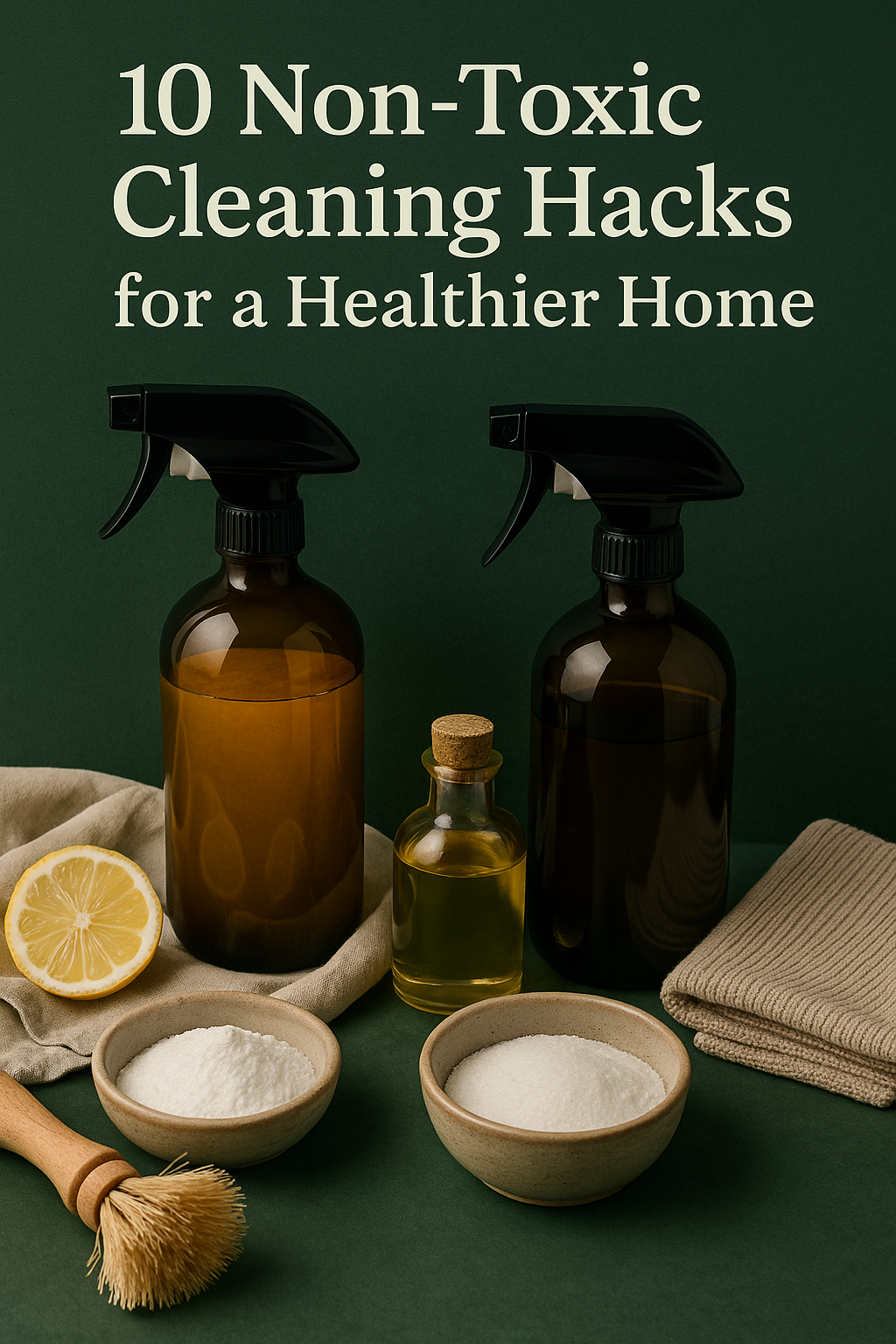
Harsh cleaners promise “fresh” and “powerful,” but that usually means synthetic fragrance, dyes, and residues your lungs and skin don’t love. The good news: a handful of pantry staples can handle 90% of household cleaning — better, cheaper, and with fewer fumes. Below are ten non-toxic hacks that punch way above their weight. Use them as written, or remix to fit your routine. Your home gets cleaner, your air gets lighter, and your budget gets happier.
1. Vinegar Glass Cleaner (Streak-Free)
Skip the neon stuff. Mix 1 part white vinegar with 1 part water in a sturdy glass spray bottle. Spray onto windows, mirrors, and glossy surfaces, then wipe with a clean microfiber cloth using a slow “S” pattern. For heavy buildup, add a small squeeze of biodegradable dish soap to your first pass, then finish with the vinegar mix for a squeaky, streak-free shine.
- Pro tip: Warm the solution slightly for winter grime; it cuts through film faster.
- Avoid: Natural stone like marble or travertine — vinegar is acidic. Use plain water + microfiber there.
When selecting vinegar for cleaning, choose white distilled vinegar with around 5% acidity. Higher concentration versions can be too harsh and less effective for general cleaning purposes. A sturdy glass spray bottle is essential to prevent plastic degradation over time, and microfiber cloths ensure streak-free results without scratching surfaces.
A quick-start checklist for this hack:
- White vinegar
- Water
- Microfiber cloth
- Glass spray bottle
Common mistakes include using too much vinegar, which can leave a pungent smell, or using paper towels instead of a microfiber cloth, which can cause streaks.
2. Baking Soda Power Scrub
For sinks, tubs, tile ledges, and crusty stovetops, make a paste with baking soda + a few drops of water. Spread, let it sit 5–10 minutes, then scrub with a non-scratch pad. Baking soda’s mild abrasiveness lifts stains without damaging enamel or most finishes. Rinse well and buff dry for that clean, matte sparkle.
- Burnt pan rescue: Cover the bottom with water, sprinkle baking soda, simmer 10 minutes, then scrape with a wooden spatula.
- Drain refresh: Pour 1/2 cup baking soda and follow with 1 cup warm vinegar; let it fizz 10 minutes and flush with hot water.
Choose a high-quality, food-grade baking soda, ensuring it’s free from clumps and impurities. Using a non-scratch pad is critical to prevent scratching delicate surfaces while still effectively removing grime.
Here’s your quick-start checklist for immediate action:
- Baking soda
- Water
- Non-scratch scrub pad
Avoid common errors like using too much water and creating a runny paste or letting the baking soda sit for too long, which can harden and make rinsing difficult.
3. Lemon Deodorizer (Kitchen MVP)
Cut a lemon in half, dip the cut side in salt, and scrub cutting boards to neutralize odors naturally. Rinse and dry upright. For microwaves, add lemon slices to a bowl of water, heat for 2 minutes, then wipe the steam-softened splatters in one pass. In the fridge, tuck a small ramekin of baking soda with 3–4 drops of lemon essential oil for a clean citrus whisper — not a fake “fragrance bomb.”
For optimal results, use fresh lemons rather than bottled lemon juice, as the latter lacks the natural oils and full acidity of a fresh lemon. A coarse salt is effective in abrasively cleaning while enhancing the lemon’s natural deodorizing properties.
Common mistakes to steer clear of include using too much salt, which can scratch delicate surfaces, or overheating lemon water, which may cause it to boil over in the microwave. Always remember to wipe the microwave while it’s still warm for easier cleaning.
4. Hydrogen Peroxide Disinfectant (Bleach-Free)
Use 3% hydrogen peroxide as a surface disinfectant for bathroom sinks, faucet handles, and cutting boards post-raw-protein cleanup. Spray generously, allow a 5–10 minute dwell time (this matters for germ kill), then wipe. Store in an opaque bottle — light degrades potency. Never mix peroxide and vinegar in the same bottle; alternate them for full coverage.
Ensure you are using food-grade hydrogen peroxide and store it appropriately to avoid light exposure, which can weaken its disinfecting abilities. The 5-10 minute dwell time is crucial for effective germ-killing, so don’t rush this step.
- Opaque spray bottle
- Hydrogen peroxide (3%)
Avoid the mistake of using hydrogen peroxide on delicate fabrics or colored surfaces, which might cause bleaching, and never mix it with vinegar to avoid toxic reactions.
5. Essential Oil Air Freshener (No Mystery “Fragrance”)
In a 16 oz bottle, combine 14 oz distilled water, 1 oz witch hazel, and 15–20 drops essential oil (lemon for kitchens, lavender for bedrooms, eucalyptus for bathrooms). Shake before each use and mist into the air or onto fabric. Your home smells genuinely fresh — not perfumey.
Using pure essential oils ensures the absence of synthetic additives. Witch hazel acts as an emulsifier, helping to disperse oils evenly in water. Ensure you have a clean, fine-mist spray bottle for even distribution.
Avoid using oils that can trigger allergies, and always spot-test on fabrics to avoid staining.
6. DIY Anti-Static Dust Spray
Mix 1 cup water, 1 tbsp white vinegar, and 1/2 tsp olive oil. Lightly mist a microfiber cloth (don’t soak) and wipe surfaces. The small oil amount captures dust and leaves a barely-there anti-static layer that keeps surfaces cleaner longer — without residue.
Choose a light, high-quality olive oil to avoid a greasy residue. Ensure the vinegar used is completely dissolved with water to maintain a consistent mixture.
Common mistakes include over-saturating the cloth, leading to excess moisture on surfaces, and not storing the solution in a tightly sealed container, which can lead to evaporation and an ineffective dust trap over time.
7. Stainless Steel Polish (With What You Already Own)
Wipe with vinegar first to degrease, then buff with the grain using a soft cloth and a pea-sized drop of olive oil. Finish with a dry microfiber for that showroom shine — no aerosols or silicone buildup needed.
Select a high-grade olive oil for minimal scent and better absorption without leaving a greasy residue. Follow the grain of the stainless steel to avoid micro-scratches that could dull the finish over time.
Precautionary steps: Avoid using too much oil, which can attract dust, and never use harsh scrubbers that can mar the steel’s surface.
8. Carpet & Rug Deodorizer
Mix 1 cup baking soda with 10 drops essential oil (lemon, tea tree, or peppermint). Sprinkle lightly, let sit 20 minutes, then vacuum slowly. It neutralizes stale odors without synthetic perfume powder that clings to fibers.
Ensure your vacuum filter is clean to effectively pick up all the baking soda, and conduct a spot test first to ensure no discoloration to colored carpets or rugs.
Avoid over-applying the mixture, which could make it difficult to vacuum up completely, and ensure your vacuum settings are suitable for high-pile carpets if applicable.
9. Grout Brightening Paste
Combine 3 tbsp baking soda with enough 3% hydrogen peroxide to make a paste. Apply, let bubble for 10 minutes, scrub with an old toothbrush, and rinse. Dry with a towel for brighter grout. Seal afterward to keep it cleaner longer.
Use a toothbrush with soft bristles to prevent damage to grout surfaces. Rinse thoroughly to remove all baking soda residue, as any remaining particles can lead to residue formation.
Avoid using this method with colored grout unless you are sure it won’t discolor the surface.
10. Natural Dish Routine Upgrades
When hand-washing greasy pans, add a splash of vinegar to rinse water — it breaks surface tension for spotless drying. If using Castile soap, don’t mix it directly with vinegar; wash first, then rinse separately. For dishwashers, run an empty cycle monthly with 1 cup of vinegar to de-scale and deodorize.
Ensure you are using a pure Castile soap without added fragrances or dyes, preserving both the dish’s surface and your health.
Avoid simultaneously combining vinegar and soap directly, as this leads to neutralization, thereby reducing effectiveness.
🧽 Bonus: The 5-Item Starter Kit
Want to simplify everything? These five items will replace dozens of chemical cleaners:
- Glass spray bottles — for DIY solutions.
- Baking soda — scrubs, deodorizers, paste.
- 3% hydrogen peroxide — disinfecting and whitening.
- Microfiber cloths — streak-free glass & dusting.
- Essential oils — clean scent without toxins.
Putting It All Together
Start with one area — kitchen glass, bathroom sink, or stovetop — and master it. Keep tools visible: a labeled bottle, baking soda jar, and a scrub brush within reach. Replacing one product at a time is how non-toxic cleaning becomes second nature.
Small swaps add up. A cleaner home starts with cleaner ingredients — and once you experience the difference, there’s no going back.
As an Amazon Associate, The Clean Code earns from qualifying purchases.
Featured Product

Glass Spray Bottle Set
Durable glass bottles for your DIY cleaning solutions. Reusable, stylish, and safe from leaching plastics.
View on Amazon →You May Also Like
The Clean Cookware Guide: Healthier Materials for Everyday Cooking
10/11/2025
Discover which cookware materials are safest for your health and how to build a toxin-free kitchen.
Read More →
Eco Cleaning Tools That Actually Work
10/13/2025
Swap plastic sponges and wasteful paper towels for durable, sustainable tools that clean better and last longer.
Read More →
Clean Air at Home: Reducing Toxins and Freshening Naturally
10/15/2025
Indoor air can be 2–5x more polluted than outdoors. Here’s how to freshen your space naturally without synthetic sprays.
Read More →