Building a Plastic-Free Kitchen
10/14/2025
⏱ 6-minute read
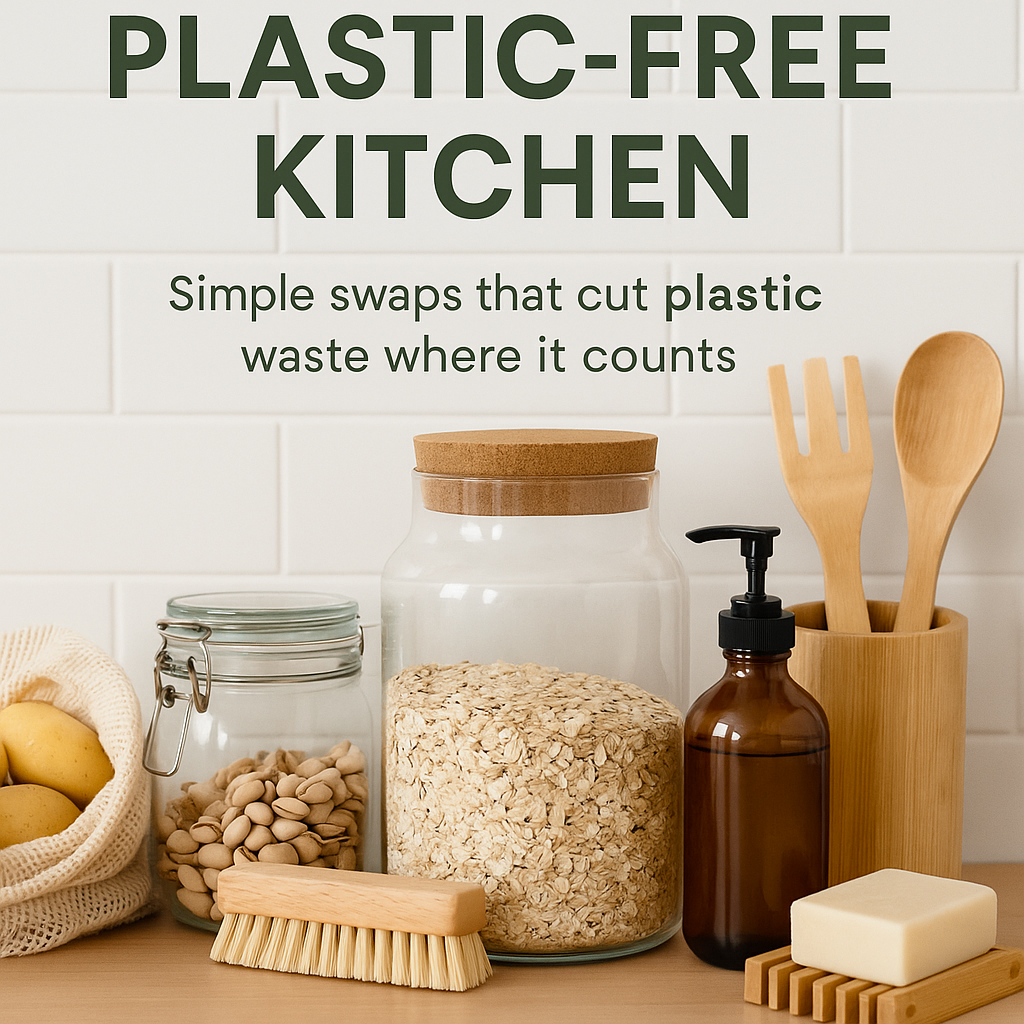
The first time I tried to “go plastic-free,” I stood in my kitchen surrounded by cling wrap, takeout tubs, and mismatched lids—and realized how much plastic runs our homes. It’s everywhere. But here’s the thing: once you start swapping a few items, it becomes surprisingly easy (and addictive). Your space starts to feel calmer, cleaner, and more intentional. And it’s not just about looks—it’s about health and longevity too.
Most plastics can leach small amounts of chemicals like BPA and phthalates into food—especially when heated or scratched. Over time, that exposure adds up. Replacing those items with glass, stainless steel, and natural fibers means fewer toxins and less waste. Let’s go step by step.
🌿 Why Go Plastic-Free?
Plastic never really disappears—it just gets smaller. Those microplastics end up in our water, air, and even food. Every swap you make—one jar, one utensil, one grocery bag—is a long-term investment in cleaner living. And here’s the secret most people miss: a plastic-free kitchen isn’t just sustainable—it’s also more beautiful and functional. Glass jars lined on a shelf or a bamboo drying rack doesn’t just work well, it feels peaceful.
Going plastic-free is less about perfection and more about progress. Start small. Replace what you use daily, not everything at once. Each time an old plastic container cracks or warps, upgrade it to something lasting. Over a year, those small shifts create a big visual and environmental impact.
🥣 1. Glass Storage Containers
Leftovers never looked better. Glass storage containers keep food fresh, reheat beautifully, and stack neatly. You can bake in them, see what’s inside at a glance, and skip the plastic lids that stain and warp over time.
- Pros: Non-toxic, durable, see-through, and endlessly reusable.
- Cons: Slightly heavier and can break if dropped.
- Best use: Leftovers, meal prep, and pantry organization.
What to Look For: Choose containers with airtight silicone gaskets to ensure spill-proof storage, and opt for a variety of sizes to fit different storage needs. It's useful to have a set that includes both deep and shallow options.
Common Mistakes: Avoid buying glass containers with thin glass and cheap plastic lids, as they may not provide the durability and the plastic-free seal you desire. Always check that the lid is truly BPA-free if you end up getting a model with a plastic component.
Quick-Start Checklist:
- Assess your current collection and plan gradual replacements.
- Purchase a starter kit with various sizes.
- Designate a storage spot in your kitchen to keep them accessible.
🍯 2. Beeswax Wraps Instead of Plastic Wrap
When I first swapped plastic wrap for beeswax wraps, I was skeptical. But once I sealed a sandwich and saw it hold perfectly, I never looked back. Beeswax wraps mold around bowls or cheese just using the warmth of your hands—and they smell faintly of honey. No crinkly plastic, no waste.
- Pros: Reusable up to a year, compostable, naturally antimicrobial.
- Cons: Not for raw meat or hot foods.
- Best use: Wrapping snacks, cheese, or covering bowls.
Choosing the Right Wrap: Ensure the wraps are made with organic cotton and sustainably sourced beeswax. Check size ranges; larger wraps can be cut down if necessary, but too small cannot enlarge.
Maintenance Tips: Rinse with cool water and mild soap, and let them air dry. Avoid scrubbing harshly or using hot water as it can reduce the lifespan.
🥄 3. Stainless Steel and Wooden Utensils
Plastic utensils melt, warp, and sometimes release microplastics into food—especially when used with heat. Switching to stainless steel and wood gives your kitchen that timeless, earthy feel. It’s one of the easiest upgrades with instant impact.
- Pros: Non-toxic, durable, and heat-resistant.
- Cons: Needs a holder or drawer organizer.
- Best use: Everyday cooking and serving.
Buying Tips: Look for high-quality utensils for longevity, such as those made from teak or acacia for wood, and choose stainless steel that is labeled 18/10 which indicates good corrosion resistance.
Common Mistakes: Don’t overload your kitchen; pick essential pieces you'll use regularly. Not every tool exists in both materials, so prioritize based on your cooking style.
🧂 4. Glass Spice Jars & Bulk Refills
Spices often come in cheap plastic bottles that sit for months by your stove—hello, slow leaching. Switch to glass spice jars with bamboo lids for a toxin-free, organized look. Label them neatly and line them up—you’ll feel like you stepped into a cooking show every time you reach for paprika.
Switching Over: Begin with your most used spices and consider decanting your bulk spices into smaller jars for everyday use.
Refilling: Use your local refill store if available. This supports local businesses and ensures you're getting fresh spices.
💧 5. Ditch Plastic Bottles and Jugs
Filtered tap water in glass pitchers or stainless bottles is cheaper, cleaner, and kinder to the planet than plastic jugs. If your local water quality worries you, invest in a countertop carbon filter or Berkey-style purifier. Your coffee, tea, and even ice cubes will taste better for it.
Considerations: Evaluate your water usage needs and choose containers that fit seamlessly into your lifestyle, ensuring they are easy to clean and maintain.
🛒 6. Bulk Shopping and Refill Stations
Bring your own containers to the bulk section—it’s the easiest way to cut plastic waste. Refill grains, beans, and nuts directly into jars or cloth bags. The first trip feels a little awkward; the second feels empowering. Plus, you’ll start forming relationships with local refill stores and sustainable shops.
Shopping Tips: Weigh your containers beforehand for easy checkouts and look for stores that offer a wide range of supplies from soaps to snacks.
🏡 Organizing a Plastic-Free Kitchen
Once the swaps start adding up, organization becomes part of the joy. Keep reusable cloth bags in a drawer near the door, store food in matching glass sets, and keep utensils visible in a ceramic holder. A small countertop compost bin keeps food waste out of sight but easy to access.
Organizational Tips: Use over-the-cabinet hooks for bags and invest in labeled jars to make finding items quick and keep the aesthetic tidy and appealing.
🔍 FAQ: The Plastic-Free Kitchen Journey
How Do I Transition Without Overwhelming Costs?
Focus on necessity. Start with critical items—storage containers and cooking utensils—and gradually add more as budget allows. Watch for sales and secondhand options at thrift stores that can reduce costs significantly.
What Should I Do with My Existing Plastic Items?
Repurpose them for non-food use where possible, like organizing tools or storing miscellaneous household items. Recycling can be an option, but check local guidelines to ensure proper disposal.
🌸 Final Thoughts
Going plastic-free isn’t about being perfect—it’s about being mindful. Each little change—whether it’s a new jar, wrap, or utensil—shifts your environment toward calm and clarity. You’ll open your fridge or pantry and feel proud, not overwhelmed. It’s progress you can see, touch, and live with every day.
Start with one drawer, one shelf, or one habit. Before long, your kitchen will tell the story of a life built with intention—free from plastic, full of purpose.
As an Amazon Associate, The Clean Code earns from qualifying purchases.
You May Also Like
10 Non-Toxic Cleaning Hacks for a Healthier Home
10/9/2025
Switch your home to safe and simple alternatives with these easy DIY cleaning tricks.
Read More →
The Clean Cookware Guide: Healthier Materials for Everyday Cooking
10/11/2025
Discover which cookware materials are safest for your health and how to build a toxin-free kitchen.
Read More →
Eco Cleaning Tools That Actually Work
10/13/2025
Swap plastic sponges and wasteful paper towels for durable, sustainable tools that clean better and last longer.
Read More →