The Science Behind Natural Air Fresheners
10/9/2025
⏱ 7-minute read
Air fresheners are supposed to make your home smell better — not pollute it. But many conventional options do exactly that. From plug-ins to “fresh linen” sprays, synthetic scents rely on chemical compounds that can trigger headaches, hormonal imbalances, and respiratory irritation. The truth is: your home shouldn’t smell like a science experiment trying to impersonate nature.
Let’s Talk About That “Ocean Breeze” Candle
That crisp “ocean breeze” aroma? It’s not coming from seashells or saltwater. Most candles and sprays use synthetic fragrances made from petroleum-based ingredients. When you burn or spray them, you’re releasing volatile organic compounds (VOCs) like benzene, formaldehyde, and toluene into your living space. These compounds don’t just irritate your nose — they circulate through your air vents, cling to fabrics, and build up over time.
Ever get a dull headache or scratchy throat after lighting a candle or spraying a “room mist”? That’s not your imagination. It’s your body reacting to airborne toxins. Studies have found that scented candles can emit the same harmful chemicals found in diesel exhaust. The good news? Nature gives us plenty of ways to make our homes smell amazing — safely.
When buying candles, consider 100% natural waxes like soy or beeswax, which are cleaner alternatives. Check for candles scented with pure essential oils rather than generic “fragrance.” Look for wicks made from cotton or wood, avoiding those with metal cores. The packaging should clearly list ingredients, avoiding vague terms like “natural fragrance blend” unless further described.
So What’s the Alternative?
Real freshness doesn’t come from synthetic perfume—it comes from airflow and plant chemistry. Opening your windows for even 15 minutes a day reduces indoor pollutants drastically. Add in natural scent molecules from essential oils, citrus peels, herbs, and baking soda, and you’ve got a completely clean alternative to plug-ins and sprays.
Unlike artificial fragrances that “hang” in the air, natural molecules break down quickly. That’s why your room smells fresh after diffusing essential oils — not cloying or heavy. It’s also why natural air fresheners are better for children, pets, and anyone sensitive to chemicals.
For those new to essential oils, start by investing in a basic set, such as lavender, lemon, peppermint, and eucalyptus. These oils are versatile and blend well in various combinations. Choose oils that are 100% pure and therapeutic grade, which can be verified through a certified organic label or from a reputable supplier offering transparency about their oil sourcing and production processes.
Quick-Start Checklist for Switching to Natural Air Fresheners
- 🏠 Air out rooms daily when possible to facilitate fresh airflow.
- 🌿 Invest in an essential oil diffuser to disperse natural scents evenly.
- 💧 Get pure essential oils; start with a basic set and expand as needed.
- 🍋 Use citrus peels to naturally scent small spaces like drawers or closets.
- 🔍 When buying natural products, look for a detailed ingredient list that includes "100% pure essential oils."
The Science Bit
Many essential oils contain compounds like terpenes, esters, and aldehydes. These aren’t just scent molecules — they interact with odor-causing compounds in the air. For example, lemon oil’s main component, limonene, reacts with ozone to neutralize unwanted smells. Eucalyptus oil can help bind to VOCs, lowering airborne toxin concentration. This isn’t “woo-woo” — it’s chemistry doing its thing.
Natural doesn’t mean ineffective. It means balanced. Instead of blasting your home with artificial scent particles that linger for days, essential oils lightly scent your space and then dissipate, leaving the air genuinely cleaner.
DIY Mix: The 60-Second Spray
If you love the satisfaction of a quick project, this one’s a keeper. Here’s an easy DIY air freshener you can make in under a minute — no special skills required:
- 1 cup filtered water
- 1 tablespoon vodka or witch hazel (helps oils disperse evenly)
- 10 drops lemon essential oil
- 10 drops lavender essential oil
Combine everything in a reusable amber glass spray bottle, shake gently, and spritz fabrics, curtains, or even the air after cooking. It’s pet-safe, affordable, and smells like a botanical spa—not a chemical storm.
For extra variety, try swapping the oils seasonally: peppermint and pine in winter, grapefruit and eucalyptus in summer.
Common Pitfalls to Avoid in DIY Fresheners
- 🌍 Avoid using plastic bottles, which can degrade when exposed to essential oils, compromising effectiveness and safety.
- 🥄 Use high-proof alcohol over vodka if available, which aids in full oil dispersion.
- 💨 Always test your spray on a small fabric patch to ensure it doesn’t stain or cause discoloration.
Natural Ways to Neutralize Odors (Beyond Scent)
- Baking soda: Place an open jar in your fridge, closet, or bathroom to absorb smells passively.
- Houseplants: Spider plants and peace lilies help filter formaldehyde and xylene naturally.
- Charcoal bags: Bamboo charcoal traps moisture and neutralizes musty odors without adding fragrance.
- Vinegar spray: Equal parts water and white vinegar can cut through stale air — smell fades as it dries.
To amplify effectiveness, rearrange these elements according to odor sources: hang charcoal bags in damp basements, set baking soda in less ventilated areas like closets, and strategically position houseplants in commonly used spaces.
FAQ: Natural Air Freshening Techniques
What’s the best way to refresh the air in a newly cleaned carpeted room?
Sprinkle baking soda across your carpet before vacuuming; this will absorb any lingering odors, especially from cleaning agents. Following up by diffusing a mix of lemon and lavender essential oils can freshen the room even more.
Top Natural Air Freshener Picks
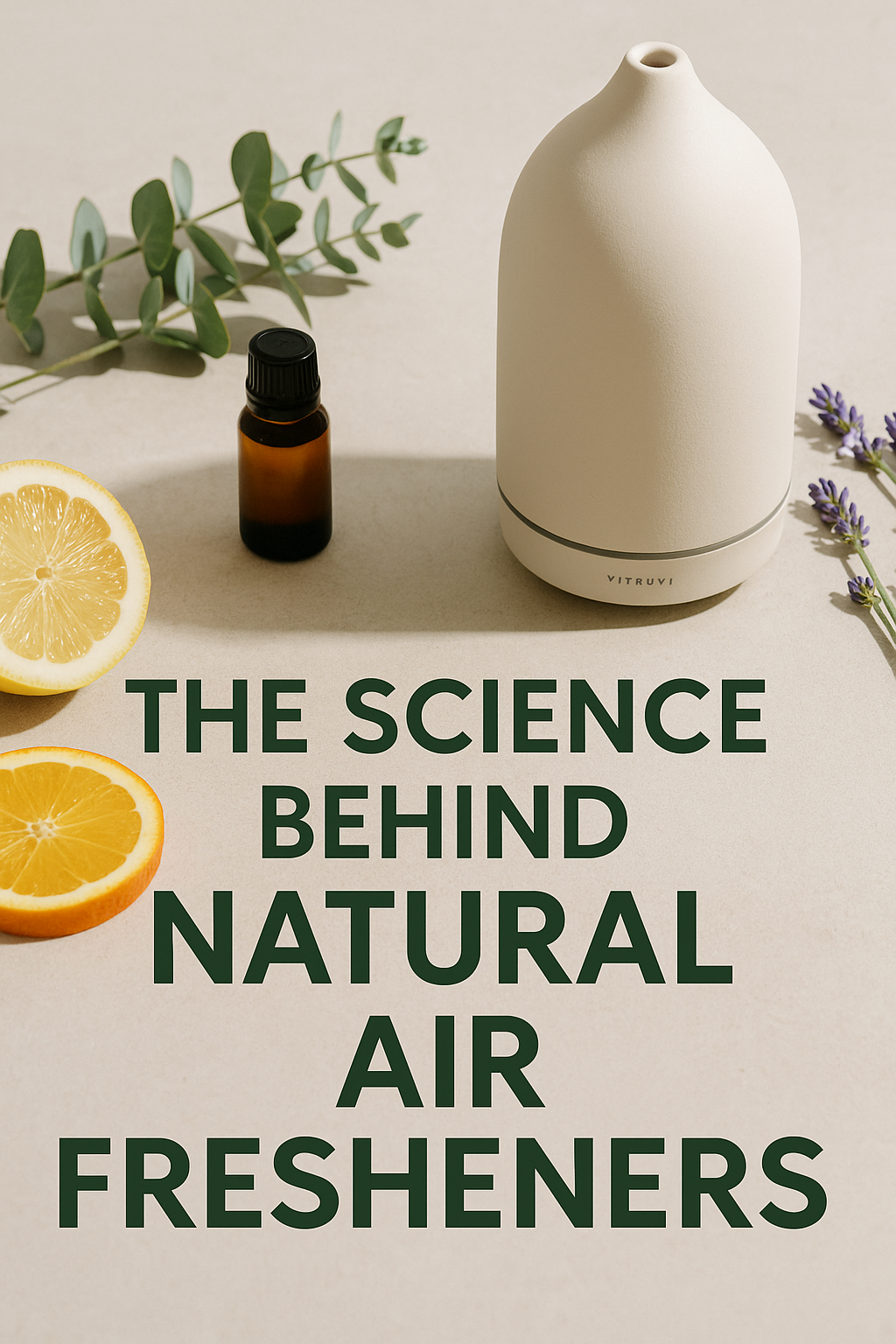
- 🌿 Vitruvi Stone Diffuser — minimalist design, ceramic finish, and whisper-quiet operation. Pairs beautifully with citrus or floral oils.
- 💧 Plant Therapy Essential Oil Set — includes lemon, lavender, peppermint, and eucalyptus. Ideal for beginners making DIY blends.
- â™»ï¸ Amber Glass Spray Bottles — reusable, aesthetic, and protect oils from light degradation.
What About Candles?
If you love that cozy candle glow, you don’t have to give it up entirely. Choose 100% soy or beeswax candles scented with real essential oils. They burn cleaner and emit minimal soot compared to paraffin-based options. Look for cotton or wood wicks (never metal-core) and skip “triple scent” labels — those usually mean synthetic overload.
Or, skip candles altogether and diffuse a calming blend instead. Our favorite evening combo: 3 drops lavender, 2 drops bergamot, and 1 drop cedarwood in a Vitruvi diffuser. Instant relaxation, zero toxins.
Bonus: Seasonal Air Freshener Recipes
- 🍂 Fall Comfort: Orange + Clove + Cinnamon (smells like a cozy bakery)
- 🌸 Spring Revival: Grapefruit + Geranium + Lemongrass
- 🌞 Summer Clean: Lemon + Peppermint + Eucalyptus
- â„ï¸ Winter Calm: Frankincense + Lavender + Pine
Store your blends in small amber bottles so they stay potent and easy to refill. Keep a set in your bathroom, laundry area, or near the front door for a quick mood boost before guests arrive.
Final Thoughts
Clean air isn’t about erasing all smells — it’s about choosing authentic ones. Skip the fake “ocean breeze” and reach for ingredients you can pronounce. Lemon, lavender, eucalyptus, and a cracked window beat a $10 plug-in every time. Your lungs, pets, and guests will thank you.
Still craving that “fresh linen” vibe? Wash your sheets using one of our non-toxic laundry swaps, and explore our Clean Air Guide for more tips. Real cleanliness always smells better than anything in a can.
As an Amazon Associate, The Clean Code earns from qualifying purchases.
Featured Product

Vitruvi Stone Essential Oil Diffuser
Minimalist ceramic diffuser that fills your home with subtle, natural fragrance — without synthetic chemicals.
View on Amazon →You May Also Like
10 Non-Toxic Cleaning Hacks for a Healthier Home
10/9/2025
Switch your home to safe and simple alternatives with these easy DIY cleaning tricks.
Read More →
The Clean Cookware Guide: Healthier Materials for Everyday Cooking
10/11/2025
Discover which cookware materials are safest for your health and how to build a toxin-free kitchen.
Read More →
Eco Cleaning Tools That Actually Work
10/13/2025
Swap plastic sponges and wasteful paper towels for durable, sustainable tools that clean better and last longer.
Read More →